Sunday, April 16, 2017

A Lesson in Rejoicing

Easter Sunday
1 Corinthians 5:6-8 


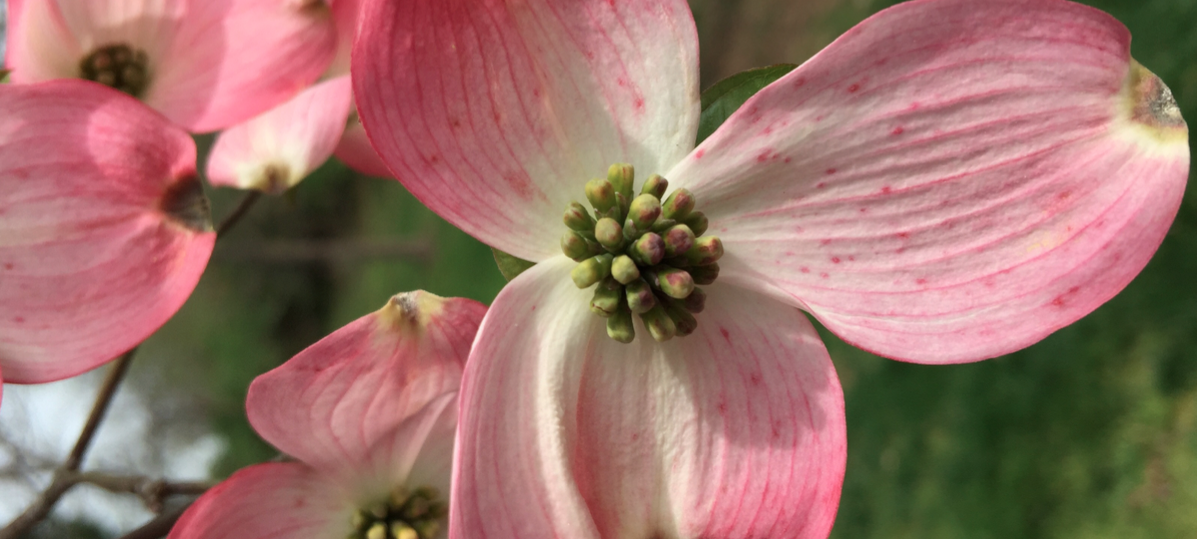
I tried to count the different birdcalls I heard off my deck this Easter morning. I couldn't. I kept getting lost in their overlay. And all together it really was a chorus. No misplaced flats or sharps. No minors. No dissonance.  The bird chorus told only the beautiful story. The otherwise will wait. 

Certainly a sacrament of joy…
And a sacrament of communion… 
And how about a sacrament of unity amid particulars…
And of course a sacrament of divine creativity…


1 Cor 5:6-8
Therefore, let us celebrate the feast, 
not with the old yeast,
the yeast of malice and wickedness.
but with the unleavened bread of sincerity and truth.

And I just might join in with the birds;)

Thank you
Surrexit Christus Alleluia

Saturday, April 15, 2017

Those 'Why?' Questions

Holy Saturday
The Domestic Church


Last night Joseph, my 18-year-old son, husband Rob, and I, watched Romero.   It was a Good Friday movie night.  It’s easy to feel weighted down by the questions of evil and why a good and gracious and powerful God allows such massive evil and suffering. It seems to me this morning that the tales of human courage and solidarity offer another why.  Why are people capable of such profound identification with their neighbor?  Can we have it both ways...both free to love and magically rescued?

Why the Incarnation?
Why the Cross?
Why the Resurrection?

Why did it take all of these to ‘save us?’

Today, to ask questions is part of my testimony of faith.  Doesn't it seem like answers are always ‘in the making?’  Like science, theology builds upon the reflection of so many over such a long time. And yet there is the constant that offers the context for the questions in the first instance. The wise and the mystical continue to ponder and what satisfied at one time can appear insufficient in another.  We are novices.

Romero, the movie, offers a few nibbles around these great mysteries.  For me…today…they are enough. 

The Incarnation…because a God who is love must be tangible and bodily; a sacrament of the image and likeness that allows for loving one’s neighbor to take on flesh.

The Cross…because ‘putting it all on God’ had to end.  Violence is our way to restore peace, not God’s.  At the crucifixion it failed.  There was no parade.  We have been facing that ever since.  We still think violence can beget peace.  Not so.

The Resurrection…now we experience presence.  God is present when we gather not in his own fleshy body but in our corporate body and in the meal we share...a Eucharistic presence.  This very path is our hope for today and our promise for tomorrow. 


Archbishop, now Saint, Oscar Romero:

“Nothing is so important to the church as human life, as the human person, above all, the person of the poor and the oppressed, who beside being human beings, are also divine beings, since Jesus said that whatever is done to them he takes as done to him. That bloodshed, those deaths, are beyond all politics. They touch the very heart of God.” 

“It has become my job to tend all the wounds produced by the persecution of the Church – to record all the abuses and pick up the bodies.”


“As a Christian I do not believe in death without resurrection. If they kill me, I will be reborn in the Salvadoran people”

Friday, April 14, 2017

Lucy, the Exposed

Good Friday of the Lord’s Passion
Isaiah 52:13-53:12
Psalm 31
John 18:1-19:42


I met a mystic once.  

The nurse called for the chaplain to visit with Lucy.  As I walked down the corridor, and paused at the almost closed door to Lucy’s hospital room, I overheard the anxious nurse:  ‘Now Lucy, let’s put that cover back over you…the chaplain is coming.’

Lucy was at least ninety with a head of silken snow-white wavy hair. And skin like the surface of my favorite pearls.  She was very weak but mightily intentional.  First she wanted me to read to her from scripture.  I remember it clearly.  I pulled from my pocket the trusty little green ‘Pastoral Care of the Sick’ book and opened it to John 14:2, My Father’s house has many rooms; if that were not so, would I have told you that I am going there to prepare a place for you?   I went on reading until she asked me to open a few of the greeting cards that had just arrived.  I opened them and read them to her…but not just the new ones.  There was a stack of others from relatives and from neighbors and friends.  Each one sent a lovely greeting, a ‘new testament’ verse to this woman Lucy.  She told me a story about each sender; the one who made the best pecan pie, the neighbor that has done her mowing since the day her husband died fifteen years prior, the niece that is both smart and kind and now in medical school.

All the while Lucy’s right fist never let go of the sheet that so concerned her nurse. She grabbed it like my daughter used to grasp her ‘blankie’ while she sucked her thumb.  As she grabbed she worked the fabric through her fist. And eventually she managed to pull the sheet off completely.  And there she was, this beautiful woman, clearly beloved by many, a woman of the deepest faith, near death, and much to the discomfort of her nurse…naked…but for her adult diaper.

At that moment I caught her staring off to the right…over her shoulder.  “Lucy, what is it?  What has grabbed your attention?"

Lucy was staring at the crucifix on the wall, her body a mirror of His.  She turned to me, and with a forcefulness not residing in her weakened body, she proclaimed with utter freedom, ‘I came into this world exposed and I will leave it exposed…just like him.’

What kind of life leads a person to that proclamation?
Was there a consistency about the cruciform pattern of her life?
What does cruciform look like…is it that mixture of great joy and great sacrifice that is the lifeblood of relationships that bring life to life?
Was cruciform her habit…so a part of her it held no sacred power to frighten but only power to draw out love?

May the cross be our comfort in trouble,
Our refuge in the face of danger,
Our safeguard on life’s journey,
Until you welcome us to our heavenly home.
-From the Book of Blessings

St. Lucy, the Exposed, pray for us.


Thursday, April 13, 2017

a communion of more than our bodies

Holy Thursday
Mass of the Lord’s Supper


Exodus 12:1-8, 11-14 
this is how you are to eat it…
Psalm 116  
our blessing cup is a communion
with the Blood of Christ
1 Cor 11:23-26  
do this in remembrance of me…
John 13:1-15  
I have given you a model to follow

The texts and sacramentals of Holy Thursday
speak so clearly of the connection between
sacrifice and service and meal  

In the face of this liturgical communication...a few extra-canonical voices;)

The nourishing quality of the eucharist, freely offered to anyone who's famished, has always been a central metaphor for me.  I don't partake because I'm a good Catholic, holy and pious and sleek.  I partake because I'm a bad Catholic, riddled by doubt and anxiety and anger: fainting from severe hypoglycemia of the soul.  I need food.


---from Nancy Mairs, Ordinary Time, 1993
(as referenced in Tridiuum, A Sourcebook p44)


People ask me:  Why do you write about food, and eating and drinking?  Why don’t you write about the struggle for power and security, and about love, the way others do?

They ask it accusingly, as if I were somehow gross, unfaithful to the honor of my craft.

The easiest answer is to say that, like most other humans, I am hungry.  But there is more than that.  It seems to me that our three basic needs, for food and security and love, are so mixed and mingled and entwined that we cannot straightly think of one without the others.  So it happens that when I write of hunger, I am really writing about love and the hunger for it, and the warmth and the love of it and the hunger for it…and then the warmth and richness and the fine reality of hunger satisfied…and it is all one.

I tell about myself, and how I ate bread on a lasting hillside, or drank red wine in a room now blown to bits, and it happens without my willing it that I am telling too about the people with me then, and their other deeper needs for love and happiness.

There is food in the bowl, and more often than not, because of what honesty I have, there is nourishment in the heart, to feed the wilder, more insistent hungers.  We must eat.  If, in the face of that dread fact, we can find other nourishment, and tolerance and compassion for it, we’ll be no less full of human dignity.

There is a communion of more than our bodies when bread is broken and wine drunk.  And that is my answer, when people ask me:  Why do you write about hunger, and not wars or love?


---from M. F. K. Fisher, The Art of Eating, 1990
(as referenced in Tridiuum, A Sourcebook p43)